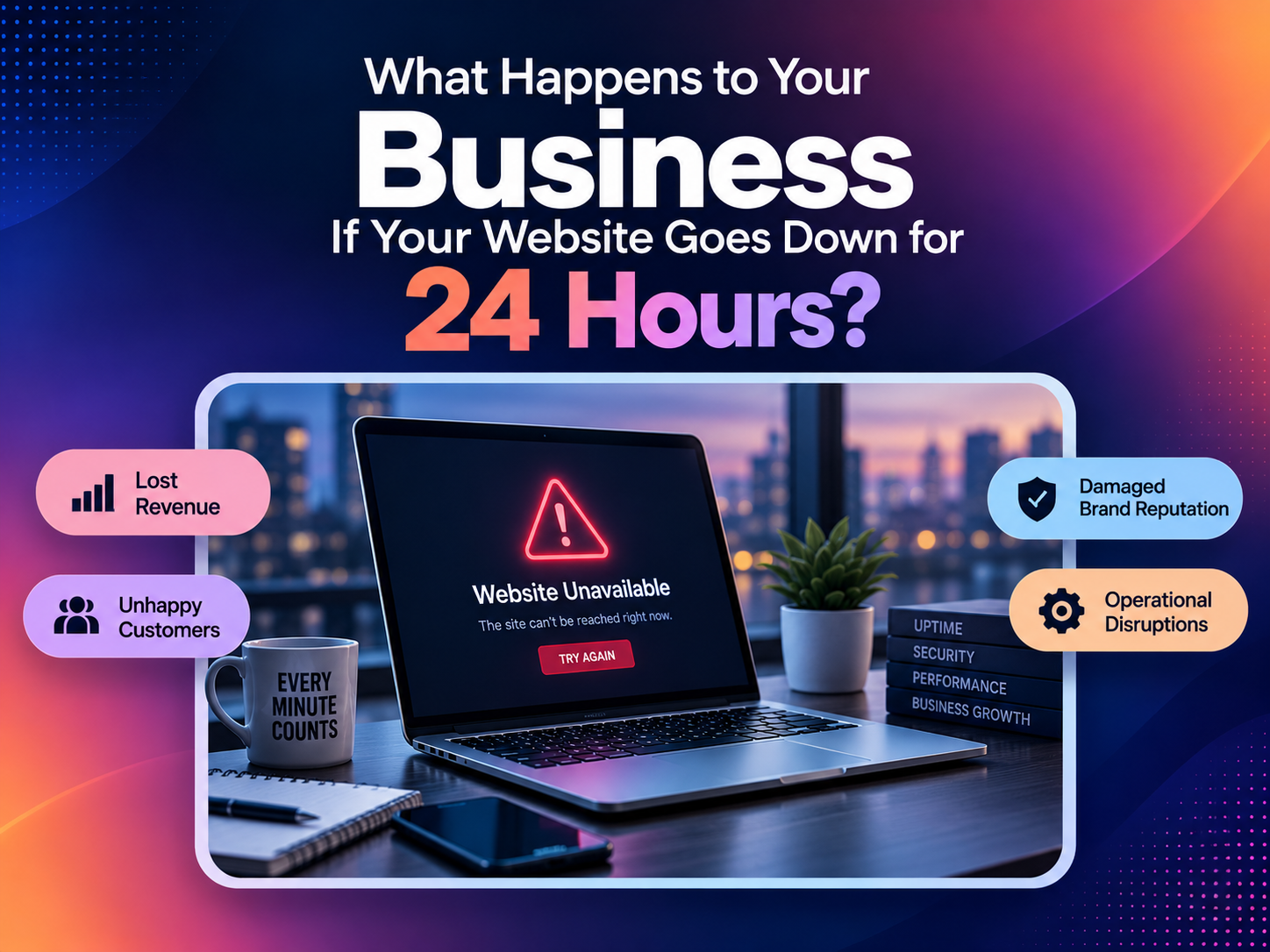
A website outage rarely affects only the website. Within minutes, customers, employees and internal systems can feel the impact.
A modern business website may handle customer inquiries, appointment requests, payments and daily workflows. When it goes offline, customers may not know what happened, employees may lose access to important tools and your team may spend hours trying to find the cause.
The error message customers see is only part of the problem. The outage can be caused by hosting, security issues, backups, network problems or the underlying infrastructure.
A 24-hour outage raises two important questions:
- How quickly can the website be restored?
- Was the business prepared before the outage happened?
The answers can determine how much disruption the company experiences.
How website downtime affects customers and operations
The first and most obvious issue during downtime is that customers cannot access your website.
Someone looking for pricing, contact details or services may leave after seeing an error page. A potential customer trying to submit a form may choose another provider. Someone trying to make a payment or request an appointment may question whether the business is operating normally.
A website outage can lead to:
- Lost sales opportunities
- Missed customer inquiries
- Failed appointment requests
- Interrupted online transactions
- Increased support requests
- Reduced customer confidence
For many customers, a company website is their first interaction with the business. When that experience fails, they may see the company as unavailable or unreliable.
The impact of downtime continues after recovery
After an outage, businesses still need to understand what happened, confirm that systems are secure and prevent the same issue from happening again. Recovery may require:
- Identifying the cause of the outage
- Checking whether customer or business data was affected
- Reviewing access logs and security alerts
- Restoring missing files or databases
- Following up on missed customer requests
- Fixing the underlying problem
Website downtime can damage customer trust
Most customers understand that technical problems happen. The bigger concern is what happens when they have no information. During an outage, customers may wonder:
- Is the company still operating?
- Is my information secure?
- Did my request go through?
- Will this happen again?
These concerns are especially important for businesses that handle payments, appointments, customer records or online services. Reliable infrastructure helps customers and employees trust that important systems will work when they need them.
What can cause a website outage?
When a website goes offline, the website itself is not always the cause. Downtime can happen because of:
- Hosting server failures
- Database problems
- Network issues
- Software updates
- Configuration errors
- DNS problems
- Third-party service failures
- Security incidents
Most business websites rely on multiple systems working together. A database issue, network failure or compromised account can affect the customer experience even if the website code has not changed. That is why businesses need infrastructure that is monitored, maintained, secured and supported by engineers who understand how those systems work together.
When is basic hosting no longer enough?
Basic hosting can be ideal for simple websites. But when a website becomes connected to sales, customer service or daily operations, businesses need more support. Important capabilities include:
- Alerts when performance drops or services fail
- Engineers who understand your environment before troubleshooting starts
- Backups that are tested before an emergency
- Security reviews, access controls, and malware response
- Infrastructure that can handle normal and peak demand
- A documented recovery process with clear ownership
MSI’s managed web hosting services support businesses that need more than a place to store website files. MSI engineers review how hosting connects with applications, backups, security tools and the systems your team relies on. Because they understand the environment before an outage happens, troubleshooting starts with context instead of guesswork.
Backups only help if they can be restored
Having backups does not automatically mean a business can recover quickly. A useful backup strategy should answer practical questions:
- How regularly are backups created?
- Where are backups stored?
- Who can restore systems?
- How quickly can recovery happen?
- Has restoration been tested?
An untested backup may not work when the business needs it most. Recovery planning means reducing the chance of failure and knowing exactly what to do when problems occur.
Security problems can take websites offline
Not every outage is caused by hardware or software failures. Security incidents can also disrupt websites and business systems. Common causes include:
- Malware infections
- Compromised administrator accounts
- Vulnerable software
- Unauthorized access
- Ransomware-related disruption
Keeping websites secure requires regular updates, controlled access, monitoring and a response plan. MSI helps businesses address security issues through services like security and virus removal as part of a broader infrastructure approach.
Choosing the right infrastructure for your business
As websites become more important to daily operations, some companies need infrastructure beyond traditional hosting plans.
Depending on their needs, businesses may consider:
- Dedicated servers
- Private cloud VPS hosting
- A colocation data center in Irvine, CA
The right choice depends on factors like:
- Application requirements
- Security needs
- Traffic patterns
- Growth plans
- Compliance requirements
The largest infrastructure option is not always the right one. The better choice is the environment that supports how the business actually operates.
The value of local engineering support
When a website fails, the first response should come from someone who understands what is connected and what changed. A troubleshooting specialist needs to understand:
- What systems connect to the website?
- What changed before the failure?
- What recovery options are available?
- How important is this system to daily operations?
Experienced IT support is valuable because outage recovery requires understanding the full technology environment. For businesses looking for an IT company Orange County provider, technical knowledge and responsiveness matter as much as the list of services offered.
MSI provides direct access to engineers who understand customer systems. MSI focuses on direct access to engineers, local technical expertise, accountability and long-term relationships. MSI also operates an Irvine data center and supports businesses that need reliable infrastructure options, including colocation data center in Irvine, CA services.
How can businesses prepare for downtime?
No technology provider can prevent every possible outage. Businesses should focus on reducing avoidable downtime and creating a clear response plan. Businesses should regularly review:
- Hosting performance
- Backup testing
- Security practices
- Recovery procedures
- Infrastructure capacity
- Support responsibilities
Companies with documented processes, tested backups and knowledgeable technical support can respond more effectively when unexpected problems happen.
Create a more reliable hosting environment with MSI
Millennium Systems Inc. helps businesses manage hosting, infrastructure, security and technology systems through experienced engineers who understand real-world business environments. Customers work directly with MSI engineers who know their systems, communicate clearly during problems and provide ongoing support.
Schedule a consultation with MSI to discuss your current hosting setup, outage risks, backup strategy and infrastructure needs.
FAQs
What happens if a business website goes down for 24 hours?
A 24-hour outage can interrupt sales, customer communication, online transactions and employee workflows. The impact is usually greater for businesses that depend on their website for daily operations.
How can a business prepare before a website outage?
Start by documenting who manages your hosting, where backups are stored and who responds during an outage. Businesses should also test recovery procedures instead of assuming backups will work when needed.
Is shared hosting enough for a growing business website?
Shared hosting can work for simple websites. Companies that rely on online revenue or customer access may need stronger monitoring, security and technical support.
Why do businesses need managed hosting?
Managed hosting adds technical oversight, maintenance, monitoring, security support and troubleshooting. It helps businesses spend less time dealing with infrastructure problems internally.
Does hosting location matter?
Hosting location can affect performance, available infrastructure options and how easily teams can collaborate when technical issues occur.
How important are backups after a website outage?
Backups are very important, but they are only useful if they can be restored. Testing recovery procedures helps confirm that backups will work during an emergency.
What is the difference between regular hosting and managed web hosting services?
Regular hosting provides the environment where a website runs. Managed web hosting services add ongoing maintenance, monitoring, security support and technical assistance from a provider.

 September 21, 2026